
Share this
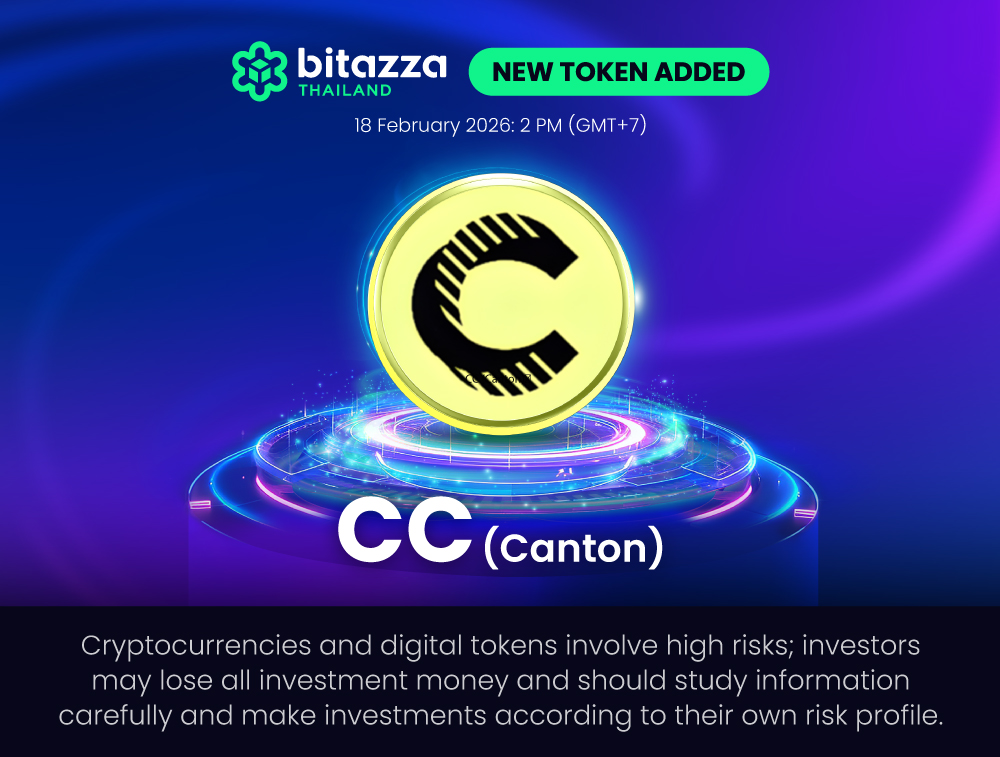
As digital assets increasingly integrate with institutional finance, Canton (CC) has emerged as a key infrastructure token for the next generation of capital markets. Designed to support Real-World Assets (RWAs) and enterprise-grade transactions, Canton (CC) is gaining attention as blockchain technology expands into traditional finance (TradFi).
In this guide, we explore what Canton (CC) is, how the Canton Network works, its key features, use cases, investment outlook, and potential risks.
Latest News About Canton (CC)
Canton (CC) attracted significant attention in the crypto market after its price surged over 25% during the 2025 Christmas period. The rally was driven by growing demand for privacy-focused blockchain solutions tailored for institutional real-world financial use cases, reflecting rising interest in blockchain infrastructure for traditional capital markets.
In addition, CC has been listed on several major cryptocurrency exchanges since November 2025, increasing its liquidity and expanding its global user base.
What Is Canton (CC)?
Canton (CC) is the native utility token of the Canton Network, a Layer 1 blockchain designed to bridge traditional finance (TradFi) with blockchain technology.
Unlike public blockchains that expose all transaction data, Canton Network uses a “Network of Networks” architecture, enabling each organization to control data access permissions. This makes it particularly suitable for:
- Financial institutions
- Capital markets
- Large enterprises
- Real-world asset tokenization
Canton focuses on privacy, regulatory compliance, and institutional adoption, positioning itself as blockchain infrastructure for enterprise finance.
How Canton (CC) Works: Technology and Architecture
Canton Network is built with advanced architecture tailored for institutional-grade performance and compliance.
Global Synchronizer
A core infrastructure layer that connects all participant domains and ensures transactions settle simultaneously. This reduces counterparty risk and operational errors across multiple institutions.
Two-Tier Consensus
A dual-layer validation system that enhances both security and scalability, enabling high transaction throughput for capital markets.
Privacy-First Architecture
Transaction data is only visible to relevant parties. This privacy-focused design makes Canton suitable for institutions that require strict financial confidentiality.
Together, these technologies enable secure, scalable integration between traditional financial systems and blockchain networks.
Key Features of Canton (CC)
Enterprise-Grade Blockchain Infrastructure
Canton Network is designed specifically for financial institutions, featuring a permissioned blockchain model and configurable privacy controls.
Utility-Driven Tokenomics (“Cantonomics”)
CC follows a model where tokens originate from real network usage. This aligns token supply with actual economic activity on the network.
Burn-Mint Equilibrium Model
CC tokens are burned when used to pay infrastructure fees, creating a burn-mint equilibrium that ties token value directly to real network usage.
Use Cases of Canton (CC)
The CC token plays several essential roles within the Canton ecosystem:
- Paying Global Synchronizer network fees
- Incentivizing infrastructure providers
- Supporting tokenized real-world asset applications such as:
- Real Estate Investment Trusts (REITs)
- Bonds
- Real liquidity systems
Canton is positioned as core infrastructure for secure enterprise-level RWA tokenization and institutional blockchain adoption.
How to Buy and Trade Canton (CC)
Trading Canton (CC) is straightforward:
- Open a crypto trading account with a trusted exchange, such as Bitazza, a leading digital asset management platform in Asia.
- Complete identity verification (KYC).
- Deposit funds into your trading account.
- Purchase CC directly on the exchange.
To sell, simply select CC in your portfolio, enter the desired price and amount, and confirm the transaction.
Future Outlook of Canton (CC)
With multiple financial institutions participating in the Canton Network, CC’s future is closely linked to the growth of real-world asset tokenization and blockchain integration into traditional capital markets.
If institutional adoption accelerates and regulatory clarity improves, demand for CC may grow alongside enterprise blockchain infrastructure expansion.
However, long-term growth will depend on:
- Real-world adoption of the technology
- Institutional participation
- Regulatory transparency across jurisdictions
Risks to Consider Before Investing in Canton (CC)
Market Volatility
Like other cryptocurrencies, CC may experience significant price fluctuations based on market supply and demand.
Regulatory Risk
As a token connected to capital markets and institutional finance, regulatory developments may impact adoption and usage.
Institutional Adoption Risk
If financial institutions delay or limit integration of Canton Network, demand for CC could weaken.
Investors should conduct thorough research and develop a clear investment strategy before trading.
Frequently Asked Questions (FAQ)
Q: Does Canton (CC) have long-term potential?
If real-world asset (RWA) tokenization continues to expand and institutional blockchain adoption grows, CC could benefit. However, regulatory and adoption risks remain.
Q: How is Canton different from other blockchains?
Canton Network prioritizes privacy and synchronized settlement through its Global Synchronizer and Privacy-First architecture, unlike public blockchains where transaction data is fully transparent.
Conclusion
Canton (CC) is a utility token at the core of a blockchain network designed for capital markets and financial institutions. By enabling secure, private, and compliant tokenization of real-world assets, Canton aims to bridge traditional finance and blockchain infrastructure.
For investors interested in enterprise blockchain infrastructure and RWA tokenization, Canton (CC) is a project worth monitoring closely as institutional adoption of blockchain continues to evolve.
References
Disclaimer
Cryptocurrency and digital tokens involve high risks; investors may lose all investment money and should study the information carefully and make investments according to their own risk profile.
Share this
Subscribe by email
บิทคอยน์ เล่นยังไง? คู่มือสำหรับมือใหม่ ตั้งแต่เปิดบัญชีจนถึงทำกำไร

Hardware Wallet คืออะไร? รู้ไว้ไม่ถูกแฮกคริปโต
CC คืออะไร? ก้าวต่อไปของสินทรัพย์ในโลกจริงบนบล็อกเชน
XAUt คืออะไร? เจาะลึก Tether Gold ทางเลือกใหม่ของการลงทุนทองคำในยุคดิจิทัล 2026

ขุด Bitcoin คืออะไร? สรุปวิธีขุด อุปกรณ์ที่ต้องใช้ และสิ่งที่ต้องระวัง
Polygon คืออะไร? รู้จัก MATIC ตัวช่วยขยายเครือข่าย Ethereum ให้เร็วและถูกลง

Decentralized คืออะไร? เจาะลึกการกระจายอำนาจเปลี่ยนโลกการเงิน พร้อมข้อดี-ความเสี่ยง DeFi

Dogecoin คืออะไร? จากเหรียญมีมตลกสู่สินทรัพย์ยอดฮิต

CVC คืออะไร? เจาะลึกเหรียญ Civic ระบบยืนยันตัวตนแห่งอนาคตบน Blockchain